

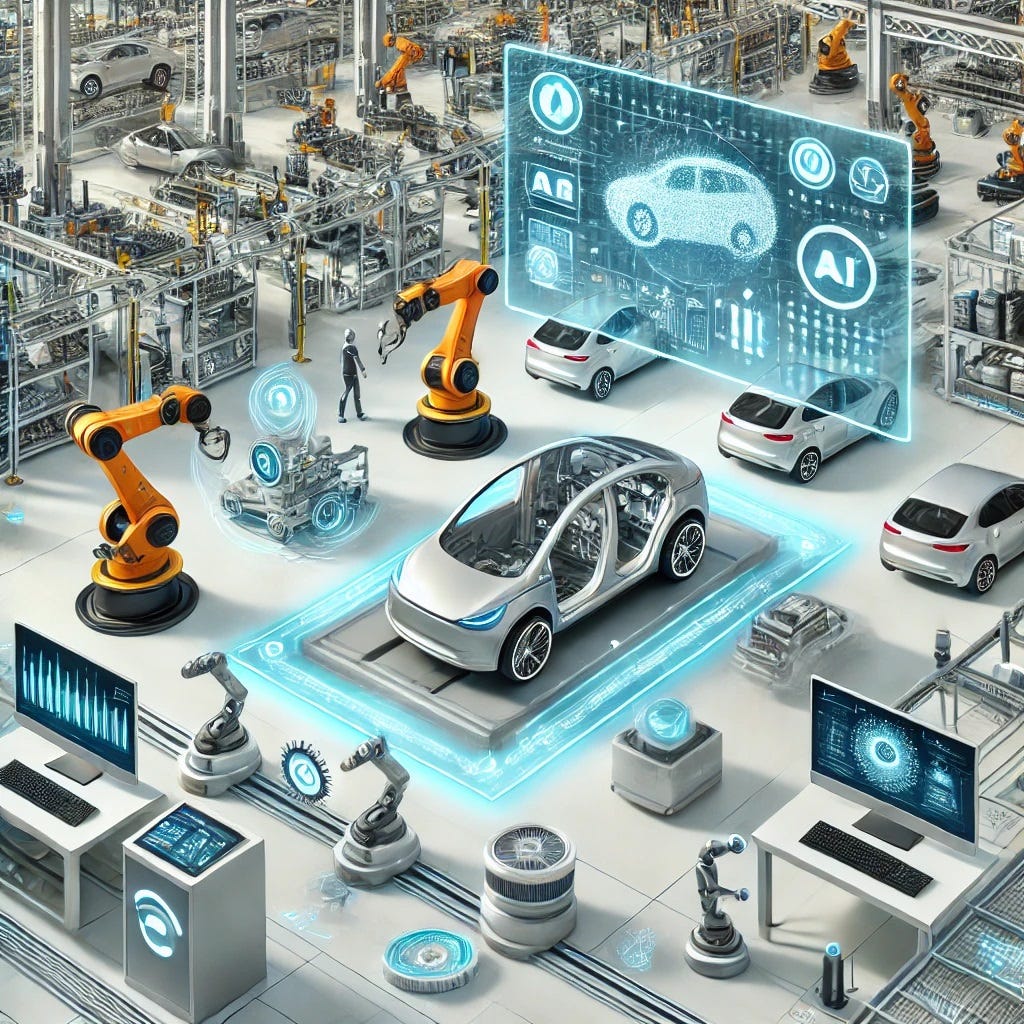
Artificial intelligence is no longer a futuristic add-on in cars—it has become a core engine driving innovation across the automotive industry. From smarter manufacturing floors to safer roads and personalized in-car experiences, AI is reshaping how vehicles are designed, built, sold, and driven.
AI in Vehicle Design and Manufacturing
AI has quietly transformed the way cars are created long before they reach the showroom.
Smarter Design Decisions
Automakers now rely on machine learning models to analyze thousands of design variations. These systems can:
- Predict aerodynamic efficiency
- Optimize material usage for lighter vehicles
- Simulate crash scenarios digitally before physical testing
This approach reduces development time while improving overall vehicle safety and performance.
Intelligent Manufacturing Plants
On the factory floor, AI-powered robotics and computer vision systems have become standard tools. They help manufacturers:
- Detect defects in real time
- Predict equipment failures through predictive maintenance
- Improve production efficiency with minimal downtime
As a result, factories are more precise, flexible, and cost-effective than ever before.
Autonomous and Semi-Autonomous Driving
Perhaps the most visible impact of AI is in driving automation.
Advanced Driver-Assistance Systems (ADAS)
AI enables features that many drivers already use daily, such as:
- Adaptive cruise control
- Lane-keeping assistance
- Automatic emergency braking
- Driver fatigue detection
These systems rely on AI to interpret data from cameras, radar, and lidar sensors in milliseconds.
The Road to Self-Driving Cars
Fully autonomous vehicles depend on deep learning algorithms that can:
- Recognize pedestrians, cyclists, and road signs
- Predict the behavior of other vehicles
- Make split-second driving decisions in complex environments
While full autonomy is still evolving, AI continues to push vehicles closer to reliable self-driving capabilities.
AI-Powered In-Car Experience
AI is also transforming how drivers and passengers interact with their vehicles.
Personalized Driving Experience
Modern cars learn driver preferences over time, adjusting:
- Seat positions and mirror angles
- Climate control settings
- Infotainment recommendations
This personalization makes vehicles feel less like machines and more like intelligent companions.
Voice Assistants and Natural Language Processing
AI-driven voice systems allow drivers to:
- Control navigation and media hands-free
- Ask real-time questions
- Manage calls and messages safely
Natural language processing ensures these systems understand context, accents, and conversational speech.
Predictive Maintenance and Vehicle Health
AI helps car owners avoid unexpected breakdowns.
Real-Time Diagnostics
Sensors combined with AI algorithms monitor vehicle health continuously. They can:
- Detect unusual vibrations or temperature changes
- Predict component failures before they happen
- Recommend maintenance at the optimal time
This proactive approach reduces repair costs and improves vehicle longevity.
AI in Supply Chain and Sales
The influence of AI extends beyond the vehicle itself.
Optimized Supply Chains
AI analyzes demand patterns, logistics data, and supplier performance to:
- Reduce inventory waste
- Improve delivery timelines
- Respond faster to market changes
Smarter Sales and Customer Support
Dealerships and automakers use AI chatbots and analytics to:
- Offer personalized vehicle recommendations
- Predict customer needs
- Enhance post-sale support
This leads to better customer satisfaction and more efficient operations.
Safety, Ethics, and Challenges
While AI offers massive benefits, it also raises important questions.
Key Challenges Include:
- Data privacy and cybersecurity risks
- Bias in AI decision-making models
- Legal responsibility in autonomous driving incidents
Addressing these challenges requires transparent AI systems, robust regulations, and continuous human oversight.
The Future of AI in the Automotive Industry
AI will continue to evolve alongside electric vehicles, smart cities, and connected infrastructure. Future cars are expected to:
- Communicate with traffic systems and other vehicles
- Improve energy efficiency through intelligent routing
- Deliver safer, more adaptive mobility experiences
The automotive industry is no longer just about engines and horsepower—it’s about intelligence, data, and software-driven mobility.
Frequently Asked Questions (FAQs)
1. How does AI improve road safety?
AI enhances safety by enabling features like collision avoidance, driver monitoring, and real-time hazard detection.
2. Are AI-powered cars already on the road?
Yes, many vehicles today use AI through driver-assistance systems, even if they are not fully autonomous.
3. Can AI reduce car manufacturing costs?
Yes, AI improves efficiency, reduces waste, and minimizes defects, leading to lower production costs over time.
4. How does AI personalize the driving experience?
AI learns driver behavior and preferences to automatically adjust comfort, navigation, and entertainment settings.
5. Is AI in cars secure from cyber threats?
Manufacturers invest heavily in cybersecurity, but ongoing updates and regulations are essential to minimize risks.
6. Will AI replace human drivers completely?
In the near future, AI will assist rather than fully replace drivers, especially in complex or unpredictable environments.
7. How does AI support electric vehicles?
AI optimizes battery management, predicts charging needs, and improves energy efficiency through smart routing.
If you want, I can also tailor this article for SEO optimization, blog publishing, or industry reports without adding fluff.