

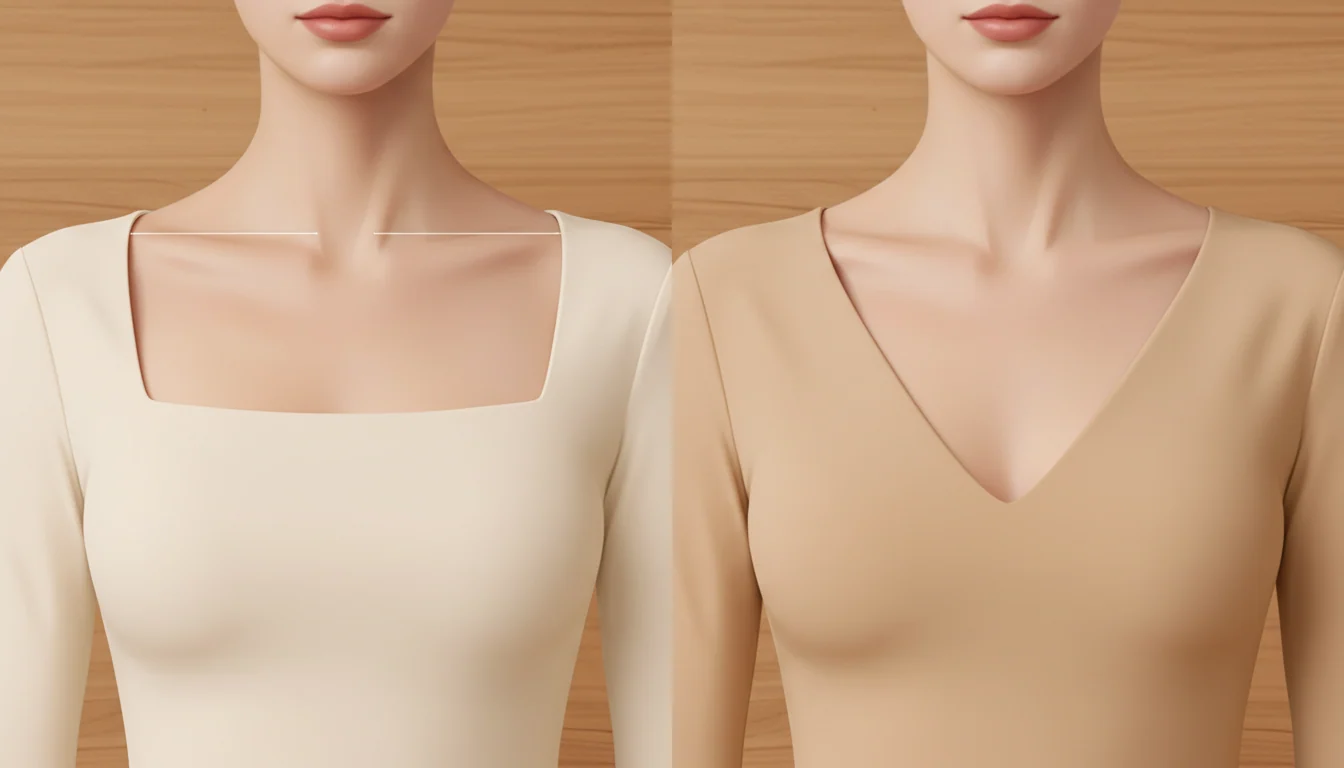
Anyone with broad shoulders knows the specific frustration of trying on a top that fits comfortably everywhere else, only to look in the mirror and see the shoulder seams pulling tight or exaggerating the upper body into a boxy silhouette. Whether your shoulder line comes from genetics, years of swimming, strength training, or an inverted triangle frame, dressing well is never about hiding your build. Instead, great styling comes down to visual geometry—guiding the eye smoothly so your upper body feels intentional, balanced, and effortless.
Out of all the details on a shirt, blouse, sweater, or dress, the neckline does the heaviest lifting. Because it sits directly between your collarbones and shoulder points, a neckline acts like a frame around your upper torso. Some shapes cut straight across the chest and visually stretch the shoulder line outward, while others draw the gaze downward and inward, creating length and softness. Once you understand how different necklines interact with shoulder width, shopping becomes noticeably faster and far more predictable.
Why Necklines Change How Wide Your Shoulders Look
Human eyes naturally follow lines and angles. When you wear a garment with a wide, shallow horizontal opening, the eye travels from left to right across the collarbone, landing directly on the outer edges of your shoulders. That horizontal movement emphasizes breadth.
By contrast, vertical and diagonal lines pull attention toward the center of the body and downward toward the waist. Breaking up the expanse of fabric across the chest prevents the upper torso from reading like one uninterrupted block. Even subtle shifts—dropping a collar by two inches or swapping a straight edge for a soft curve—can change how structured or relaxed your frame appears.
The Most Flattering Necklines for Broad Shoulders
You do not need a completely new wardrobe to balance a strong shoulder line, yet keeping a handful of reliable neckline silhouettes in regular rotation makes everyday dressing much easier.
V-Necks and Deep Plunges
If there is one universal hero for broad shoulders, it is the V-neck. Two angled lines meeting at a point create an unmistakable downward arrow right down the center of the torso. That vertical focal point breaks up chest width, elongates the neck, and draws attention away from the outer shoulder seams.
A moderate V-neck works seamlessly for everyday t-shirts, knitwear, and button-down shirts left undone by one or two buttons. For evening dresses, wrap tops, or tailored blazers worn over a camisole, a deeper V-neckline amplifies that elongating effect without feeling forced. Wrap silhouettes are particularly effective because the diagonal crossover fabric mirrors the V shape while also defining the waistline.
Scoop and U-Necklines
Not every outfit calls for sharp angles. A deep scoop neck or elongated U-neck introduces softness and vertical openness while keeping the look casual and approachable. Unlike a wide, shallow crew neck that sits high against the throat, a lower scoop reveals part of the collarbone and upper chest, reducing the visual weight of a solid wall of fabric.
Look for scoop necks with wider straps or properly aligned shoulder seams rather than razor-thin spaghetti straps. Very thin straps can sometimes make broad shoulders appear wider by contrast, whereas a balanced strap width feels proportional and supportive.
Asymmetric and One-Shoulder Styles
An asymmetric neckline disrupts symmetry across the upper body, which immediately stops the eye from measuring one shoulder against the other. Diagonal necklines—whether on a sleek knit top, a draped blouse, or an evening dress—guide the gaze at a slant across the torso rather than straight across.
One-shoulder garments work on the same principle, leaving one collarbone open while anchoring the opposite side. To keep the look refined, choose asymmetric cuts with clean draping rather than heavy ruffles or oversized bows perched right on the shoulder cap.
Halter and Cutaway Necklines
Halter necklines and high cutaway armholes angle inward from the armpits toward the base of the neck. By exposing the outer edges of the shoulders in a deliberate, diagonal line, a halter turns strong shoulders into a sleek focal point instead of fighting against them. This style is especially flattering in warm-weather tops, sleeveless midi dresses, and athletic-inspired silhouettes, provided the straps sit closer to the neck rather than wide toward the outer edges.
Sweetheart Necklines
On structured tops and dresses, a sweetheart neckline combines a gentle dip at the center with curved lines over the bust. That central dip performs much like a V-neck by pulling focus inward, while the rounded curves soften angular collarbones and muscular upper-body lines.
Necklines That Tend to Widen the Upper Body
Knowing what to skip—or how to style around trickier shapes—saves plenty of fitting-room guesswork. Certain necklines naturally amplify width across the top of the frame:
-
Boat necks (bateau): Because a boat neck runs nearly straight from shoulder point to shoulder point, it creates an unbroken horizontal line right across the widest part of your upper body.
-
Off-the-shoulder and Bardot tops: Sitting horizontally across the upper arms, these styles visually connect both arms and shoulders into one wide span.
-
Square necklines: Sharp ninety-degree corners mirror and emphasize angular shoulder lines, especially when the straps sit wide near the edges of the shoulders.
-
High, tight crew necks: While wearable with the right layering, a high, closed neckline creates a solid expanse of fabric across the chest that can make the upper torso feel heavy or boxy.
If you already own a crew-neck sweater or square-neck top you love, you do not have to banish it from your closet. Layering an open cardigan, an unbuttoned overshirt, or a long pendant necklace over a high neckline recreates the vertical V-line your outfit was missing.
Sleeve Shapes and Seam Placement Matter Just as Much
A flattering neckline can still feel off if the sleeves and shoulder seams work against it. Pay close attention to where the seam sits on your frame. Properly fitted set-in sleeves should land right at the natural edge of your shoulder bone—never drooping halfway down your upper arm in an oversized drop-shoulder cut, which adds unnecessary bulk.
Raglan sleeves, where the seam runs diagonally from the underarm to the collar, are another smart detail to look for. That diagonal seam breaks up the shoulder cap much like a V-neck breaks up the chest. On the flip side, puff sleeves, gathered sleeve heads, structured shoulder pads, and flutter sleeves perched right on top of the shoulder add volume exactly where you least need it. Clean, fluid sleeves—such as three-quarter sleeves, relaxed dolman cuts in drapey fabrics, or classic tailored sleeves—keep the silhouette streamlined.
Pulling the Full Silhouette Together
Necklines work best when the rest of the outfit supports the same sense of proportion. Dark, matte, or softly draping fabrics on top absorb light and skim smoothly over the upper body, while lighter colors, subtle textures, or tailored volume on the bottom—such as wide-leg trousers, A-line skirts, or straight-leg denim—anchor the lower half of your frame.
When you pair a deep V-neck or fluid scoop top with balanced trousers or a gently flared skirt, your shoulders no longer dominate the entire outline. Instead, everything reads cohesive, intentional, and comfortable—allowing you to focus on how clothes feel rather than constantly adjusting your sleeves in the mirror.