
Business And Finance

How to Clean White Leather Sneakers So They Look New Again

White leather sneakers have a way of making almost any outfit feel intentional, from tailored chinos and a crisp tee to relaxed denim on a Saturday afternoon. Yet that same crisp finish acts like a magnet for sidewalk dust, oily chain grease, commuter scuffs, and damp grass stains. Within a few weeks of regular wear, a pair that once looked gallery-ready can start looking tired, dull, or dingy around the toe box and midsole.
Restoring them does not require harsh bleach, aggressive scrubbing, or tossing a good pair into the washing machine. Leather is a natural or coated skin material that responds to gentle chemistry, controlled moisture, and proper conditioning. When you work with the material instead of fighting it, you can lift stubborn grime, brighten the upper, clean up the rubber soles, and keep the leather supple without cracking or peeling the finish.

Know Your Leather Before You Start

Not every white sneaker is made from the same hide, and treating them identically is one of the fastest ways to ruin a pair. Most mainstream sneakers use smooth full-grain or top-grain leather sealed with a thin protective polyurethane topcoat. That topcoat resists light spills and wipes clean easily, though heavy abrasion or strong solvents can strip it and leave a matte patch behind.
Suede, nubuck, and perforated panels require extra care. Even on mostly smooth white sneakers, you may find suede heel tabs, perforated toe boxes, or textured overlays near the eyestays. Water and heavy soap can darken suede or leave tide lines, while moisture trapped inside perforations can linger if you rush the drying process. A quick check of the upper and tongue tag before you mix a cleaner saves plenty of frustration later.

Gather the Right Supplies

A thorough clean works best when everything sits within reach before your hands get soapy. Most of what you need is already sitting in a laundry room or kitchen cabinet, paired with a couple of low-cost shoe care basics.
  • Soft-bristle brushes: Use a horsehair brush or soft nylon brush for the leather upper and a slightly firmer brush dedicated solely to the rubber sole and tread.

  • Microfiber cloths: Keep two or three clean cloths handy for wiping away grime, lifting suds, and buffing at the end.

  • Mild soap or dedicated leather cleaner: Dish soap diluted heavily in warm water, castile soap, or a gentle foaming sneaker cleaner works well for routine maintenance.

  • Baking soda and white vinegar: Useful for targeted paste treatments on set-in stains or dull midsoles, though vinegar should never be used straight on delicate finishes.

  • Magic eraser (melamine foam): Effective on rubber midsoles and outsoles, but use it lightly or skip it on smooth leather uppers since melamine acts like ultra-fine sandpaper.

  • Leather conditioner: A small amount of non-greasy balm or cream replenishes moisture after cleaning so the leather stays flexible.

  • Cotton swabs or an old toothbrush: Handy for tight seams, stitching channels, and eyelets where dirt loves to hide.

Step-by-Step Guide to Cleaning White Leather Sneakers

Approach the process in a logical order so loosened dirt from the soles does not transfer back onto clean leather, and so excess water never pools inside the shoe.

1. Prep the Shoes and Remove Laces

Start on a dry surface and unlace the sneakers completely. Pulling the laces out lets you clean under the tongue and around the lower eyestays where grime collects unnoticed. If your laces are stained or gray, soak them in a bowl of warm water with a few drops of mild detergent or oxygen-based whitener for twenty to thirty minutes, then rinse thoroughly and hang them to air dry.
Remove any insoles if they slip out easily, and knock loose dry dirt out of the interiors. Take your dry soft-bristle brush and sweep away surface dust, grit, and dried mud across the uppers and soles. Brushing dry debris off first prevents mud from turning into a gritty paste once liquid hits the shoe.

2. Clean the Leather Uppers Gently

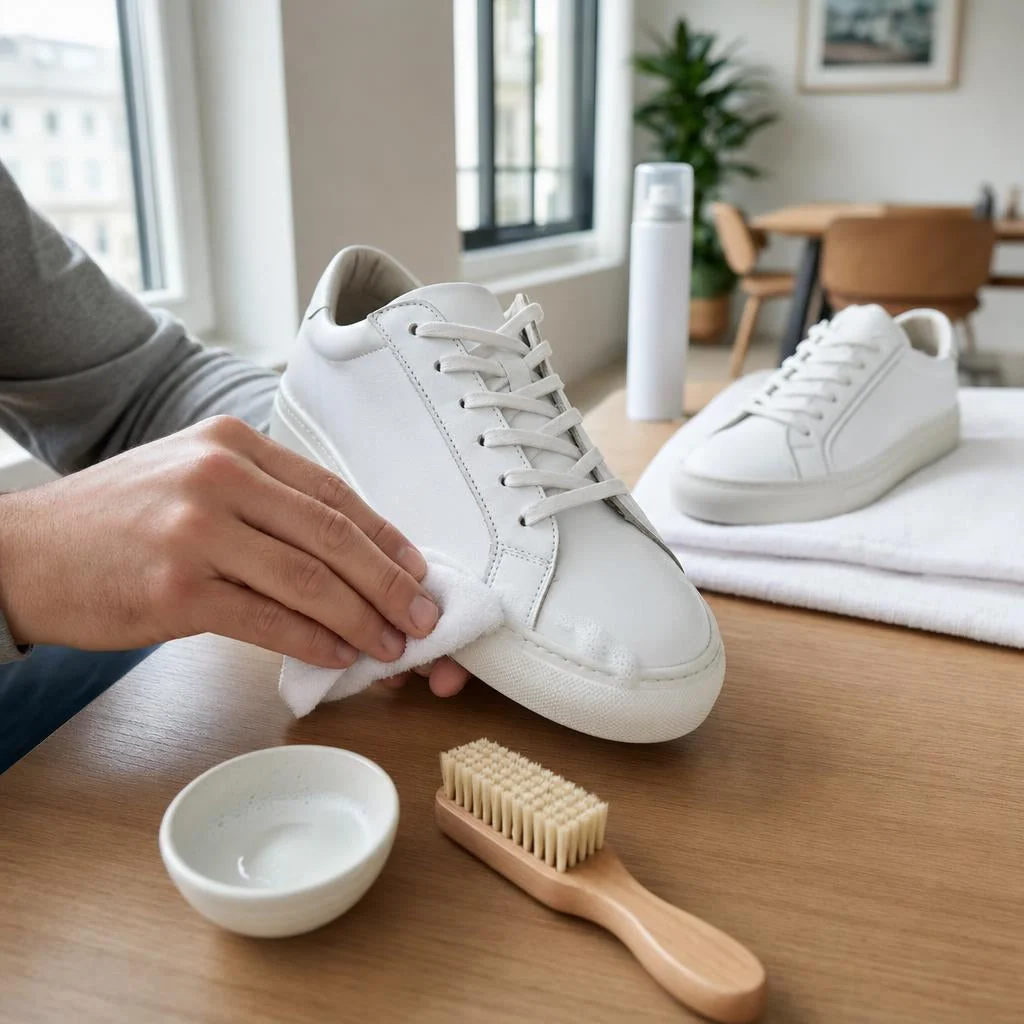
Mix a small bowl of lukewarm water with just a few drops of mild dish soap or castile soap, or pump a dedicated sneaker cleaner onto a damp microfiber cloth or soft brush. Avoid soaking the brush or dripping water straight onto the leather. Excess water weakens adhesives over time and can cause lining separation or stiff spots.
Work in small sections using light circular motions. Pay attention to high-contact areas like the outer toe cap, medial instep, and heel counter where scuffs build up fastest. Keep a clean, damp microfiber cloth in your other hand to wipe away lifted dirt and soap residue as you go rather than letting dirty suds dry on the surface.

3. Tackle Stubborn Scuffs and Stains

If light soapy brushing leaves behind dark marks or old scuffs, adjust your approach based on what caused the mark. For general grime or light discoloration on smooth leather, dab a tiny amount of baking soda mixed with a few drops of water into a gentle paste, rub it lightly with a soft cloth or damp cotton swab, and wipe it clean right away.
Grass stains and food spots often respond well to a brief spot treatment with mild soap and a soft brush, followed by immediate wiping. Avoid nail polish remover, acetone, undiluted rubbing alcohol, or chlorine bleach. Those harsh solvents can strip the white finish, yellow the leather, or dry out the fibers to the point of cracking.

4. Brighten the Midsole and Outsole

Rubber midsoles and outsoles take a beating with every step, and cleaning them separately makes a dramatic difference in how fresh the whole shoe looks. Dip a firmer brush into soapy water and scrub along the midsole sidewalls and around the foxing tape where the sole meets the upper. Use a cotton swab or toothbrush to clear trapped grit from crevices and stitching.
For stubborn gray scuffs on plain white rubber, a lightly dampened melamine foam pad can lift marks quickly. Keep the pressure light and stay off glossy painted leather panels so you do not dull their sheen. Rinse or wipe the rubber thoroughly with a damp cloth afterward so no chalky residue remains.

5. Rinse, Stuff, and Air Dry Properly

Once the leather and soles look clean, wipe the entire exterior with a clean cloth dampened with plain cool or lukewarm water to remove leftover soap. Leftover detergent attracts new dirt and can leave a faint film once dry.
Stuff the inside of each sneaker loosely with plain white paper towels or unprinted kraft paper. Avoid dyed newspaper or colorful magazine pages, which can transfer ink onto a damp white lining if the shoe gets too wet. Stuffing helps the sneaker hold its shape while drying and pulls moisture away from the interior.
Set the shoes in a well-ventilated room at normal room temperature away from direct sunlight and heat sources. Never put leather sneakers in a clothes dryer, next to a space heater, or in direct baking sun. Rapid heat shrinks and warps leather, dries out natural oils, and can loosen sole glue.

6. Condition and Protect the Finish

After the sneakers are completely dry—which usually takes several hours to overnight—apply a small dab of leather conditioner to a clean cloth and rub a thin, even layer across the smooth leather panels. Let it sit for ten to fifteen minutes, then buff gently with a dry microfiber cloth. Conditioning restores softness and helps prevent creasing lines from turning into cracks.
If you want added defense against rain, road salt, and splash stains, apply a light, even mist of leather-safe water and stain repellent outdoors or in a ventilated area, following the can’s drying instructions before wearing them out.

Common Mistakes That Ruin White Leather

Even well-intentioned cleaning routines can backfire when a few classic pitfalls sneak in. Being aware of what to avoid keeps your sneakers looking crisp for years rather than a single season.
  • Tossing them in the washing machine: Agitation and prolonged water exposure can warp the structure, stain white leather from internal dyes or adhesives, and weaken stitching.

  • Using too much water: Drenching the shoe slows drying down and risks water stains, mildew odors, or stiff leather.

  • Scrubbing aggressively with stiff bristles: Hard bristles can scratch coated leather and fray thread along seams.

  • Skipping conditioning: Clean leather without moisture replenishment can feel dry or brittle over time, especially in arid climates.

  • Storing them dirty or damp: Putting sneakers away with salt, mud, or trapped moisture sets stains deeper and encourages odors.

Simple Habits to Keep White Sneakers Looking Fresh

A two-minute routine after wearing your shoes beats an hour-long rescue mission every few months. Wipe down the soles and toe caps with a dry or slightly damp microfiber cloth when you come home, especially after walking on wet pavement or dusty paths.
Rotate your pairs instead of wearing the same white sneakers every single day. Giving leather a day of rest lets moisture evaporate naturally and eases stress on the creases across the vamp. Keep shoe trees or paper stuffing in pairs you wear frequently so the toe box stays smooth and structured between outings.
With a gentle touch, a few basic tools, and a little patience during drying, scuffed white leather sneakers can bounce back remarkably well—ready to step back into your rotation looking clean, sharp, and close to the day you brought them home.