

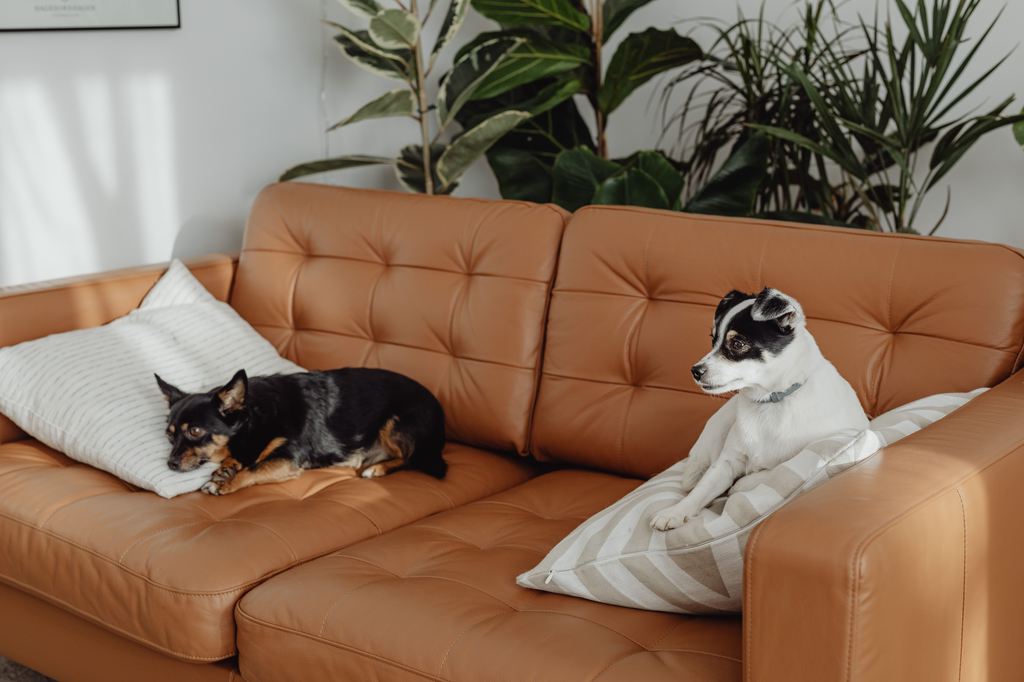
Shopping for a sofa when you share a living room with a toddler and a dog rarely comes down to pure aesthetics. Most parents and pet owners already know what happens to standard upholstery within six months of real family life: applesauce lands in the seat crevices, muddy paws trace a path across the cushions, and someone eventually tests whether a washable marker really washes out.
When narrowing down serious contenders, two options dominate almost every conversation in furniture showrooms: performance fabric and top-grain leather. Both carry higher price tags than basic polyester blends, and both are marketed as family-friendly investments. Still, they handle claws, spills, sticky fingers, and daily wear in fundamentally different ways. Understanding where each material shines—and where it falls short—makes the decision far easier before you spend several thousand dollars on a centerpiece piece of furniture.
What Sets These Two Materials Apart
Before comparing stain resistance or scratch durability, it helps to clarify what these terms actually mean, because retail labels often blur the lines.
Performance fabric is not a single fiber. Instead, it is a category of textiles engineered for heavy residential or commercial wear, typically woven from solution-dyed synthetic fibers like polyester, acrylic, or olefin, or treated with stain-repelling barriers at the yarn level. Quality performance weaves resist liquid absorption, clean easily with mild soap and water, and stand up to high abrasion without pilling or thinning out.
Top-grain leather comes from the outermost layer of the hide after the very top surface has been lightly sanded or buffed to remove natural blemishes, then finished with a protective pigment and topcoat. That finishing step is what makes top-grain leather practical for busy households. Unlike untreated aniline leather, which absorbs oils and liquids almost immediately, finished top-grain leather has a uniform surface that repels moisture and wipes clean with minimal effort.
Spills, Cracker Crumbs, and Sticky Hands
With a toddler in the house, liquid spills and smeared snacks are daily events rather than rare accidents. How an upholstery material behaves during the first thirty seconds after a juice cup tips over determines whether cleanup takes a paper towel or an afternoon with an upholstery extractor.
How Top-Grain Leather Handles Messes
Finished top-grain leather has an immediate advantage when it comes to surface spills. Because the protective topcoat seals the hide, milk, juice, yogurt, and pureed fruit sit on top of the cushion instead of soaking into fibers. A quick wipe with a damp microfiber cloth usually removes the mess completely, and leather does not trap sour milk odors or harbor dust mites inside the upholstery surface.
The catch with leather lies in the seams and cushion gaps. Crumbs, melted chocolate, and spilled liquids can still work their way into stitching lines or under removable seat cushions, and harsh household disinfectants or baby wipes containing alcohol will dry out and strip the protective finish over time.
How Performance Fabric Handles Messes
High-grade performance fabrics—especially tight weaves made from solution-dyed yarns—cause liquids to bead up on the surface rather than sinking straight into the foam cushion below. If you blot a spill promptly, it lifts cleanly without leaving a watermark. Even dried-on messes like crayon, jelly, or muddy footprints can usually be lifted with mild dish soap, water, and a soft-bristle brush.
Where fabric loses a step to leather is texture and time. Textured weaves like chenille or bouclé hold onto fine crumbs, dried playdough, and pet dander far more stubbornly than smooth leather. If a spill sits unnoticed behind a throw pillow for hours, liquid can still seep past the weave into the cushion core, making odor removal harder.
Claws, Jumping, and Rough Play
A dog sprinting across the sofa to bark at the delivery truck puts a completely different kind of stress on upholstery than a spilled sippy cup.
Scratch Resistance and Pet Hair
Pet hair is where leather wins effortlessly. Fur slides right off top-grain leather and wipes away in seconds, whereas even tightly woven performance fabrics collect hair through static and friction, requiring regular vacuuming with an upholstery attachment.
Claws are a different story. On top-grain leather, a dog’s nails will leave surface scuffs and scratches. Minor marks can sometimes be blended out with leather conditioner or natural skin oils, and many homeowners appreciate how leather develops a lived-in patina over time. However, if you have a large dog that digs at cushions before lying down or launches off the sofa at full speed, deep scratches can permanently mar the finish.
Tightly woven performance fabrics—such as microfiber, performance velvet, or dense flat-woven synthetics—resist claw punctures remarkably well because there are no loose loops for nails to snag. Loose, chunky weaves or textured bouclé should still be avoided around dogs, as a single hooked claw can pull a thread and unravel the look of a cushion.
Comfort, Temperature, and Daily Feel
Practicality matters, yet nobody wants a sofa that feels stiff, noisy, or uncomfortable during family movie night.
Performance fabric feels warm, soft, and inviting right out of the showroom. It adapts quickly to room temperature, offers quiet comfort without creaking, and comes in hundreds of colors, patterns, and textures that hide minor everyday wear between cleanings. Medium-toned heathered fabrics are especially forgiving when you have both muddy paws and sticky fingers in rotation.
Top-grain leather starts out firmer and feels cool to the touch when you first sit down, which can be refreshing in warmer climates and slightly chilly in winter until it warms to your body heat. Over several years, quality top-grain leather softens and molds to the shape of the cushions, taking on character rather than looking worn out. Solid-colored leather does show surface scuffs more visibly than a speckled weave, though darker browns, cognac tones, and distressed finishes disguise minor marks far better than flat black or bright white.
Long-Term Durability and Maintenance
Both materials can easily last seven to ten years or longer in an active household if you buy genuine quality rather than lookalike substitutes.
With performance fabric, durability comes down to weave density and rub count, often listed as Martindale or Wyzenbeek scores. Choosing a tight, flat weave over a loose decorative texture prevents snagging and pilling. Maintenance involves weekly vacuuming to remove grit and pet hair, prompt spot-cleaning with mild soap and water, and occasional deep cleaning of removable cushion covers—checking whether covers are genuinely machine-washable or spot-clean only before buying.
With top-grain leather, longevity depends on avoiding bonded leather or thin split-grain hides marketed under vague labels. Maintenance is straightforward: dust regularly with a dry cloth, wipe spills immediately with a slightly damp cloth, keep the sofa out of direct afternoon sunlight that can fade and dry the hide, and apply a quality leather conditioner every six to twelve months to keep the surface supple and resistant to cracking.
Which One Makes More Sense for Your Home?
The better choice usually depends on which daily battle takes up more of your energy.
Choose top-grain leather if your dog sheds heavily, you want effortless cleanup for liquid spills and food smears, and you do not mind natural scuff marks adding character over time. It is particularly strong for families dealing with allergies, frequent toddler spills, and dogs that mostly lounge rather than dig at cushions.
Choose performance fabric if you have an energetic dog with sharp claws that treats the sofa like a trampoline, you prefer a softer and warmer seating feel, or you want a textured, patterned look that camouflages everyday wear. Just stick to tight, smooth weaves and skip loose loops or delicate textures until the toddler and puppy stages are behind you.