

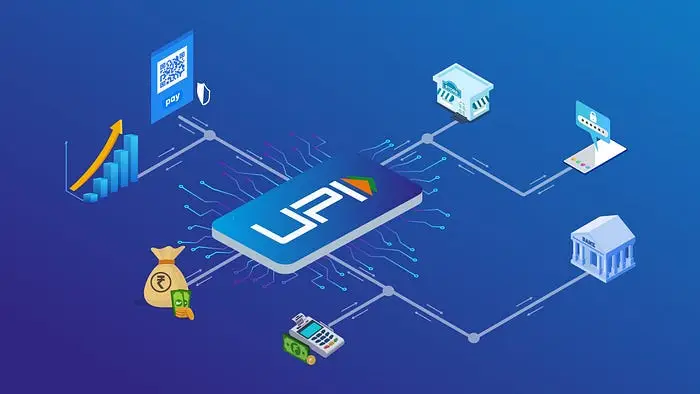
If there is an Indian innovation that grabbed all the attention of the global headlines, it is undoubtedly the UPI (Unified Payments Interface). Today, among all countries in the world, India is the country with the highest number of digital transactions.
UPI is the real-time payment system developed by the National Payment Corporation of India (NPCI). There are many UPI-enabled apps that help with cashless payments.
Simplified Transaction:
UPI provides money transfer by using a virtual payment address (VPA) instead of bank account numbers and IFSC codes. So it is user-friendly to use. With simplified instructions and easy-to-follow steps, UPI enables people with various levels of technical knowledge to make transactions easily. With no lower limit on the amount of money that can be transferred, UPI has made it easier to make small payments.
Boost To The Indian Economy:
UPI has significantly contributed to the growth of the Indian digital economy since its launch in 2016 by making cashless transactions more accessible, and it encourages the adoption of digital payment methods.
UPI is being used everywhere, from street vendors to large shopping malls. This adoption constantly increases, which leads to reducing the dependency on cash and thus creates a more efficient financial system.
Make Payments Digitally:
Plenty of people in India make payments through UPI money transfer apps. These apps provide seamless and user-friendly interfaces for making payments. Users can initiate payments anywhere and anytime as long as they have an internet connection.
Financial Inclusion:
UPI plays a crucial role in financial inclusion by making millions of Indians participate in the formal banking system. The UPI bank payment system is built with Aadhaar as its base. Even users without debit cards can use a UPI ID to transfer money from their Aadhaar-linked bank accounts in real-time.
UPI enables all kinds of people across the country to make both high- and low-value transactions and it is one of the keys to the success of the UPI. It has bridged the gap between the banked and unbanked populations by promoting financial inclusion across the country.
Enhanced Security:
In this digital era, security is the priority. UPI provides multi-layered security protocols like two-factor authentication and biometric verification. UPI always ensures that every transaction is safeguarded against unauthorized access.
UPI transactions are protected by advanced encryption protocols such as TLS (Transport Layer Security), AES (Advanced Encryption Standard), and PKI (Public Key Infrastructure) to ensure that the user credentials and transaction data remain confidential during the transaction.
Features Of UPI 2.0:
- Overdraft Facility: This empowers users to perform transactions even if their account balance is insufficient and ensures uninterrupted services.
- One-time mandate: It enables users to create one-time mandates for the pre-authorized payment.
- Linking multiple accounts: It allows users to link multiple bank accounts to a single UPI handle.
- Bill sharing: It introduces bill-sharing options, enabling users to split bills and expenses seamlessly.
To Conclude:
UPI has undoubtedly been a game-changer in India’s digital payment platform. The UPI money transfer apps has made transactions more accessible, secure, and convenient. By revolutionizing the way people make transactions and boosting India’s digital economy, UPI has played an essential role in India’s financial growth.